The 5-Person Rule
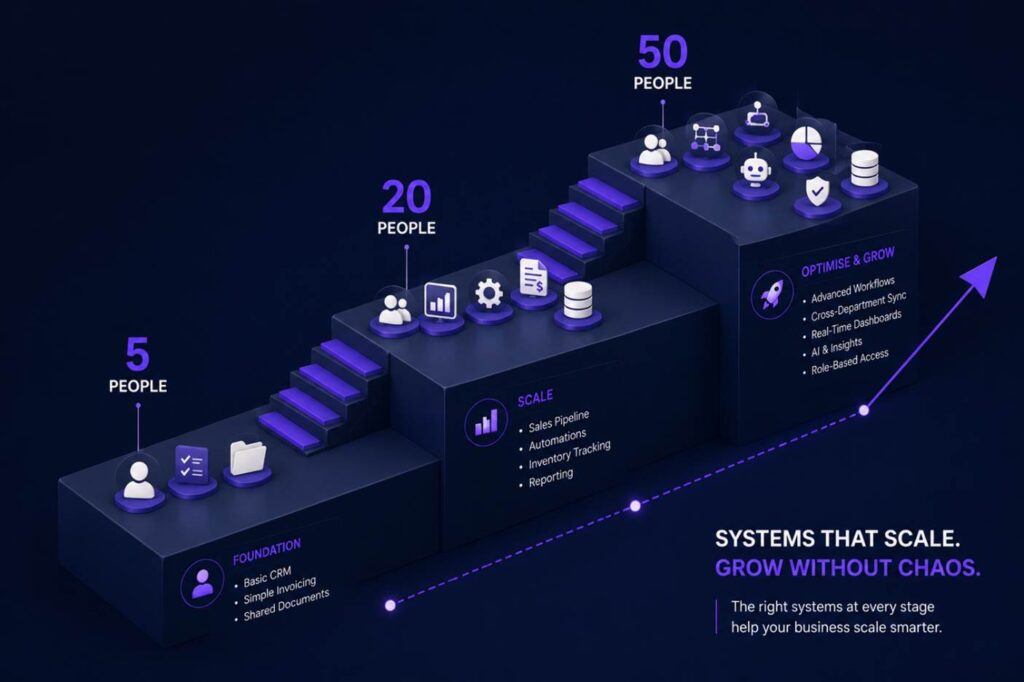
At five people, almost any system works. The founder knows every customer. The team fits in one room. Decisions happen in real time because everyone is in the same WhatsApp group.
At twenty people, the cracks appear. The founder can’t know every customer anymore. Decisions take longer because the information isn’t where it needs to be. The WhatsApp group has 400 unread messages and nobody is sure which ones matter.
At fifty people, businesses that haven’t built proper operational infrastructure don’t just slow down, they start moving backwards. Customer experience deteriorates. Errors multiply. The founder spends all their time in the operation instead of on the business.
This isn’t a management failure. It’s a systems failure. And it’s entirely predictable and preventable.
The Three Breakpoints of SME Growth
Breakpoint 1: When one person can no longer hold it all.
Early-stage businesses run on institutional knowledge. The sales manager knows the pricing. The ops manager knows the supplier terms. The bookkeeper knows which clients pay late. That knowledge lives in people’s heads, not in systems and it works, until someone goes on leave, leaves the company, or the volume simply exceeds what one person can track.

Breakpoint 2: When the spreadsheet becomes the liability.
Most SMEs reach a point where their master spreadsheet, the one that tracks orders, or inventory, or customers, or all three, becomes more dangerous than useful. It’s being edited by multiple people. Version control is a polite fiction. And the business is making decisions based on data that may or may not be current.
Breakpoint 3: When the customer experience stops being consistent.
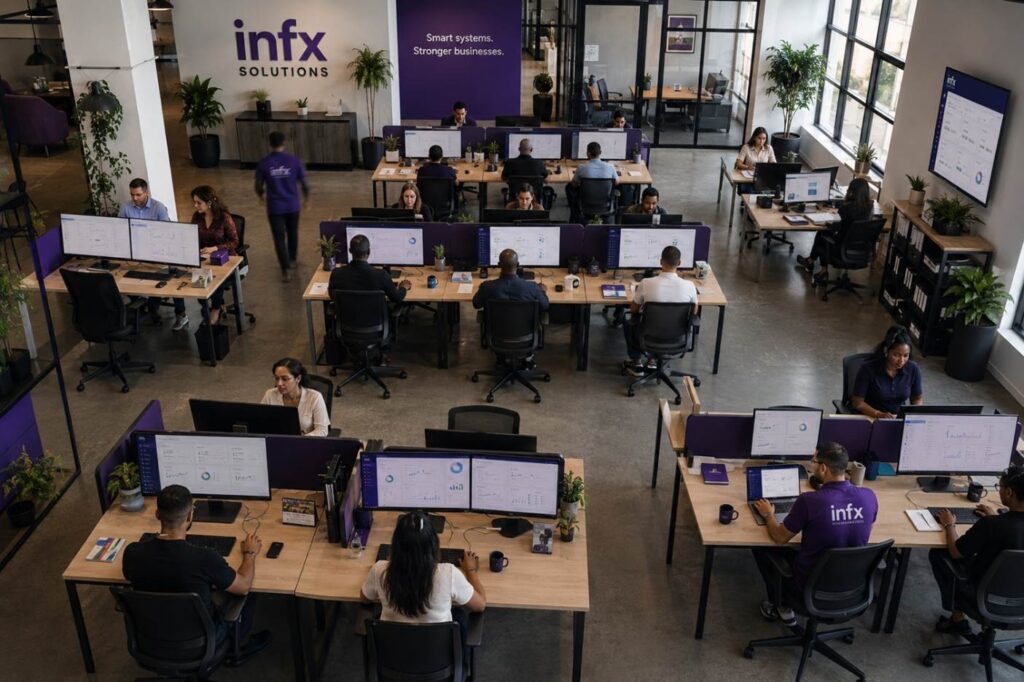
As teams grow, the customer experience becomes a function of which team member the client happens to reach, not of what the business has committed to delivering. A unified system means every team member sees the same customer history, the same outstanding issues, the same agreed terms. Without it, inconsistency becomes the brand.
What Smart Systems Actually Enable
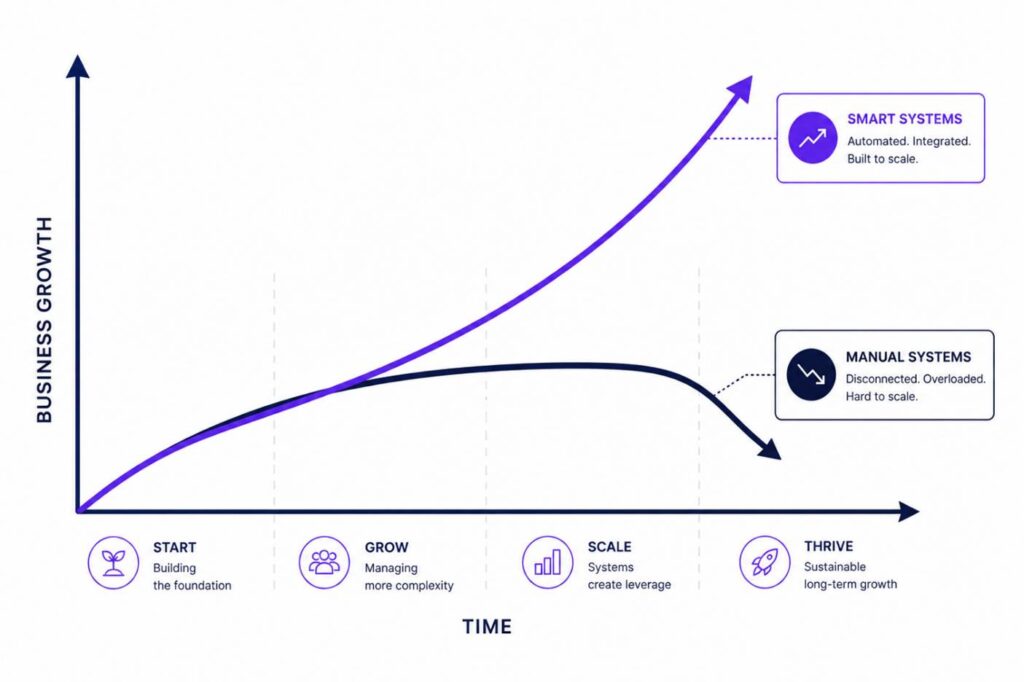
The shift from manual to intelligent isn’t about replacing people with software. It’s about giving people the tools to work at a level that manual processes simply can’t support.
When your CRM, inventory, finance, and operations sit in an integrated system, three things change immediately:
Decisions get faster and better.
Leadership can see what’s actually happening in the business in real time, not at month-end. When the data is reliable, decisions get made confidently instead of cautiously.
The business becomes less dependent on key individuals.
When processes live in systems rather than in people’s heads, the business can onboard new staff faster, manage handovers more cleanly, and maintain consistency regardless of who’s in the chair.
Scale becomes additive rather than exponential in effort.
Adding a new team member, a new location, or a new product line should be a configuration exercise, not a crisis. With the right systems in place, growth adds capability without proportionally adding complexity.
The INFX Approach to Scaling Infrastructure
INFX works specifically with SMEs who are at or approaching these breakpoints. We don’t apply a generic template — we start by understanding how your business actually operates, where the friction is highest, and what the next stage of growth requires from your systems.
The result is a digital infrastructure built for where you’re going, not just where you are. Zoho’s ecosystem of 40+ integrated applications gives us the building blocks. Our implementation methodology — document, build, deploy, automate — gives you a system that’s configured to your business model, not adapted from someone else’s.
The ceiling isn’t fixed. It’s a systems problem. And systems problems have solutions.
| Start removing your ceiling. Explore the right Zoho products free for 30 days. zoho.infxsolutions.co.za |
